Spring
Green-up and pre-emergent
Warm-season grasses come out of dormancy. Pre-emergent goes down before crabgrass germinates, and the first feedings begin as growth picks up. Fescue is mowed high and kept ahead of spring weeds.
Maintenance programs
Turf management is the health of the grass itself, the feeding, weed control, aeration, and overseeding that keep a lawn thick, green, and able to crowd out weeds. In metro Atlanta’s transition zone, the right program depends on the grass you have and the Georgia calendar.
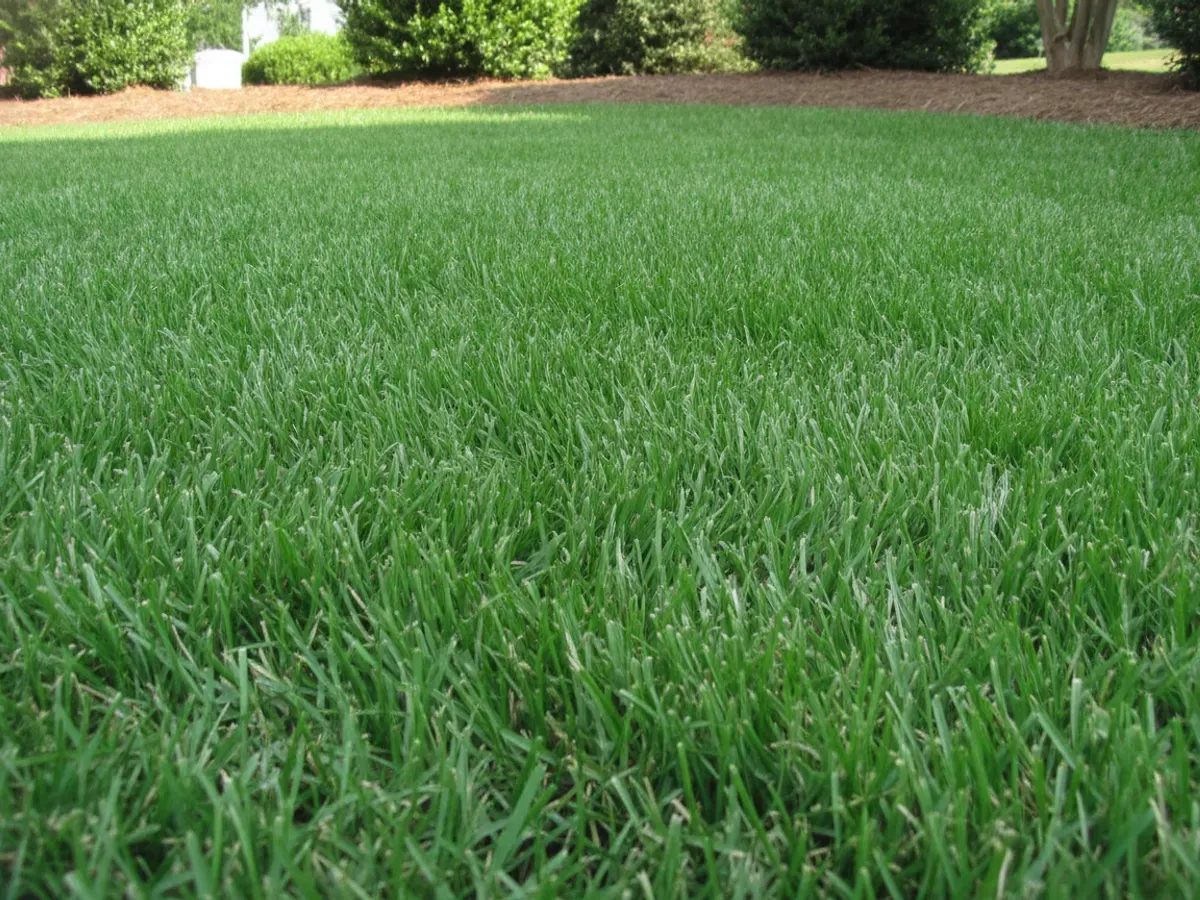
What a program covers
A turf-management program bundles the season-timed treatments that keep the grass itself strong. This is what it covers over a year.
Scheduled fertilization gives the grass the nutrients it needs at the point in the season it can actually use them. Warm-season grasses are fed through the growing heat of summer; cool-season fescue is fed in fall. Feeding at the wrong time wastes product and can push weak, disease-prone growth.
A pre-emergent applied before weeds germinate stops most crabgrass before it ever sprouts, and targeted post-emergent control handles the broadleaf weeds that slip through. With weeds, timing matters more than volume.
Georgia’s heavy red-clay soils compact over time, which chokes roots and sheds water. Core aeration pulls small plugs from the lawn to open the soil so air, water, and nutrients reach the root zone again.
Aeration and overseeding together rebuild a thin lawn. Fescue is overseeded in fall so the new grass establishes in cool weather and thickens ahead of the next summer.
Native metro Atlanta soils tend to run acidic. Keeping pH in the range a grass prefers, with lime where a soil test calls for it, is what lets fertilizer actually do its job.
Regular visits mean a fungus, a patch of grubs, or a thinning area is caught and treated early, before it spreads across the whole lawn.
Know your grass
Marietta sits in the transition zone, where both warm-season and cool-season grasses grow, and each is fed, weeded, and renewed on its own schedule. The grass a lawn is made of drives the whole program.
Warm-season grasses, Bermuda, zoysia, and centipede, love heat: they green up in late spring, grow hard through the summer, and go dormant and tan over winter, so they are fed and pushed in the warm months. Tall fescue is a cool-season grass: it holds its color through the cold but suffers in the peak of a Georgia summer, so it is fed and overseeded in fall and mowed high to protect its roots. A program that treats every lawn the same way ignores this; a good one is built around it.
| Grass | Season | Feeding & weed control | Aeration & overseeding |
|---|---|---|---|
| Bermuda | Warm-season | Fed steadily from late spring through summer while it grows hardest; pre-emergent goes down before crabgrass germinates, with spot weed control through the season. | Core-aerated in early summer during active growth; left to go dormant over winter rather than overseeded. |
| Zoysia | Warm-season | Fed more lightly than Bermuda; once it fills in, its dense, slow growth crowds out most weeds, so it needs less herbicide. | Aerated in early summer while it is growing; rarely overseeded, since it knits together on its own. |
| Centipede | Warm-season | Fed sparingly, since too much fertilizer makes it decline; weeds are managed carefully because it is sensitive to some herbicides. | Aerated lightly in summer; not overseeded, and pushed as little as possible. |
| Tall fescue | Cool-season | Fed mainly in fall and again in early spring while it is actively growing; weeds are controlled in the cooler months when it is awake. | Core-aerated and overseeded every fall, the key event in its year, to rebuild the thickness that summer heat thins out. |
The turf calendar
Turf work is really about timing. Each step lands at the point in the Georgia year where the grass can actually use it.
Spring
Warm-season grasses come out of dormancy. Pre-emergent goes down before crabgrass germinates, and the first feedings begin as growth picks up. Fescue is mowed high and kept ahead of spring weeds.
Summer
Bermuda, zoysia, and centipede are in full growth and are fed and watched through the heat. Fescue is under stress in the hottest weeks, so it is mowed high and protected rather than pushed.
Fall
The big season for fescue: core aeration and overseeding rebuild thickness, and a fall feeding sets it up for winter. Warm-season lawns get a final feeding as they slow toward dormancy.
Winter
Warm-season grasses are dormant and tan, so the work is cleanup, weed watch, and planning next year. Fescue stays green and is mowed as needed on milder stretches.
Why a program
It is tempting to call someone the week the weeds appear or the lawn looks tired. The trouble is that most turf problems are decided months earlier. A pre-emergent only works if it goes down before the weed seeds germinate. Fertilizer only helps if it lands when the grass is actively growing. Aeration and overseeding rebuild a lawn only in the right season for its grass type. A single treatment at the wrong moment mostly wastes money.
A program solves that by putting each step on the calendar in advance, tuned to your grass, your soil, and metro Atlanta’s seasons, and by having the same technicians see the lawn through the year, so a small problem is caught before it becomes a bare patch. Over a season or two, that is the difference between a lawn that is patched and a lawn that is genuinely healthy.
Questions
Lawn maintenance is the cutting work, mowing, trimming, edging, sweeping, and cleanups. Turf management is the health of the grass itself, feeding, weed control, aeration, and overseeding. Many properties enroll in both so one crew looks after both how a lawn is cut and how it grows.
Lawn maintenance →Most metro Atlanta lawns are a warm-season grass, Bermuda, zoysia, or centipede, that greens up in late spring and goes tan in winter; a lawn that stays green through the cold months is usually tall fescue. We identify what you have when we walk the property, because the grass decides the mowing height and the whole treatment calendar.
Turf care is about timing across a whole year, a pre-emergent before weeds germinate, feeding when the grass can use it, aeration and overseeding in the right season. A single application at the wrong time does little. A program puts each step at the point in the Georgia calendar where it actually works.
Yes. We start by figuring out why, compaction, the wrong mowing height, a pH problem, or weeds that got established, and build a plan to correct it. A thin lawn is usually rebuilt with aeration, overseeding, and the right feeding schedule over a season or two, not overnight.
Request an estimate →Yes. We manage turf on both residential lawns and large commercial grounds, scoped to the site, with the same attention to grass type, soil, and season.
All services →Tell us about your property and we will identify your grass, look at the soil and the trouble spots, and scope a turf-management program with no obligation.