Build
Drainage
Standing water ruins lawns, erodes beds, and threatens foundations, and in metro Atlanta’s heavy clay it drains slowly. We diagnose where water is really going and build the fix, dry creeks, dry-well systems, drains, and grading, so a property sheds water instead of holding it.
- Since 1986 Four decades solving metro Atlanta drainage.
- We follow the water Solutions built on where water actually goes.
- Dry creeks and dry wells The right fix for the property, not one product.
- Clay-country grading Built for Georgia’s heavy, slow-draining soil.
What we build
Dry creeks, dry wells, and drains
Drainage is not one product. It is the right combination of channel, reservoir, and grade for how water moves on your property.
-
Dry creeks
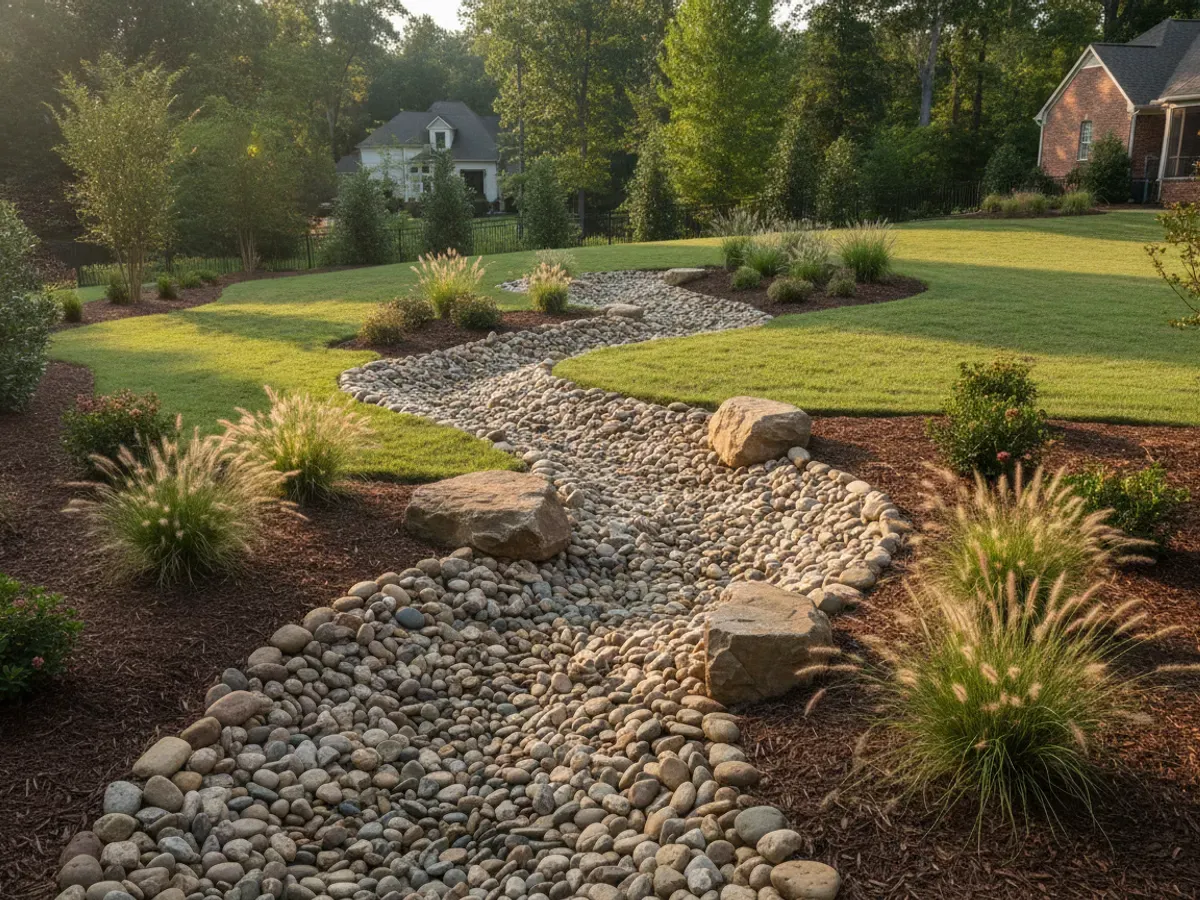
A graded channel of river rock and accent boulders that catches runoff and carries it across a property and away from the house. It does the work of a drain while looking like a natural streambed, so the fix becomes part of the landscape instead of a scar across it.
-
Dry-well systems
An underground reservoir of gravel or a chambered basin that collects water and lets it soak slowly into the ground. The answer for a low spot where water has nowhere to run off to, taking the water out of sight and out of the lawn.
-
Drains and grading
French drains, channel drains at hardscape edges, downspout connections, and regrading to redirect the flow. Most real drainage fixes combine a few of these, matched to how water actually moves on your specific property.
By property type
Solutions by property type
The right fix depends on the shape of the land and where the water comes from. A few common metro Atlanta situations and what usually helps.
| Property | The problem | What usually helps |
|---|---|---|
| Sloped yard | Runoff races downhill, erodes beds, and pools at the bottom | A dry creek or French drain to catch and carry the flow, with regrading |
| Low, flat yard | Water has nowhere to run off and sits after every rain | A dry well or catch basin to collect it and let it soak away |
| Near the foundation | Water pools against the house and threatens the crawlspace | Regrading away from the house, downspout extensions, and a French drain |
| Patio or wall edge | Water sheets off hardscape and undermines the base | Channel drains and grading built into the hardscape |
Before and after
From standing water to a dry yard
A representative drainage transformation: a bare, water-shedding grade rebuilt into a landscape that carries runoff away.
-
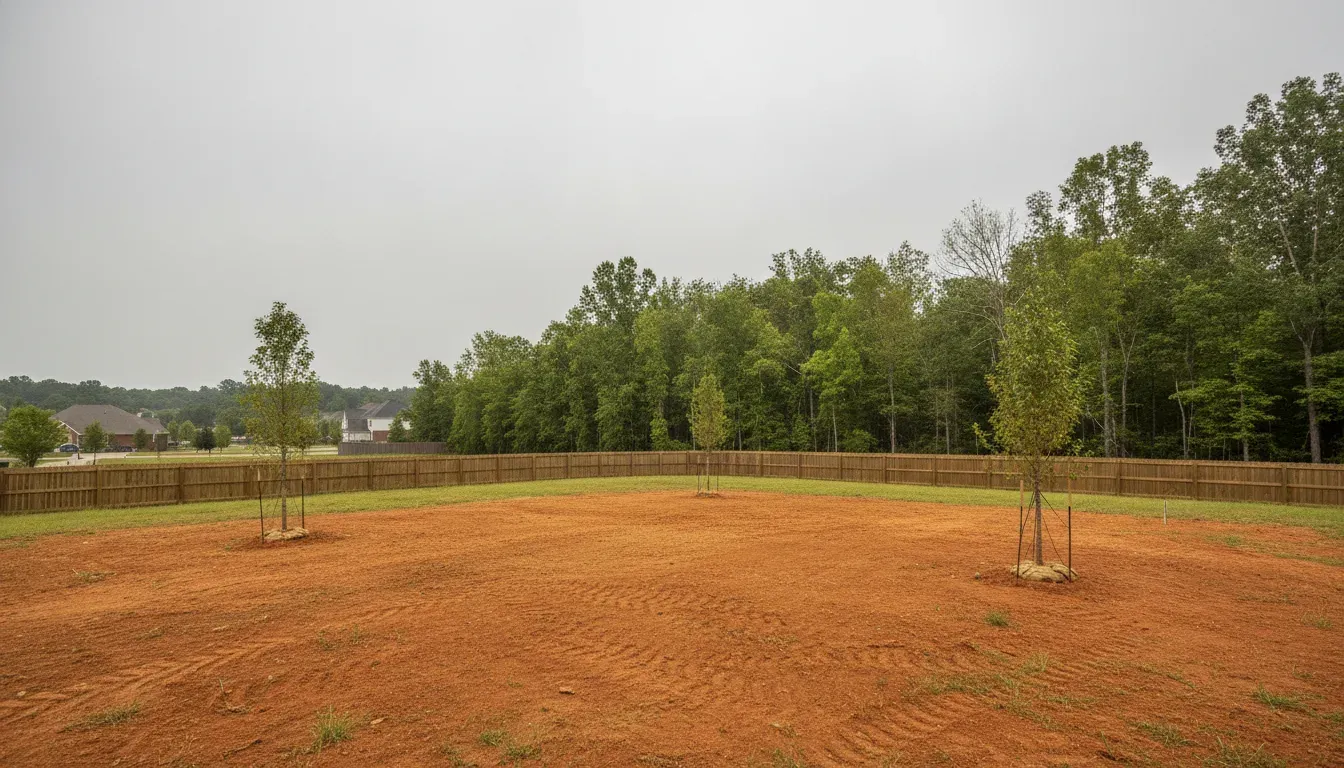
Before: bare grade where water pools -
After: a dry creek carries water away
Questions
Frequently asked questions
How do you figure out what is causing standing water?
We follow the water. The telling signs, water still sitting hours after a rain, a spongy or mossy lawn, mulch and soil washing out of beds, or water finding the crawlspace, each point somewhere. We read the grade, the soil, the downspouts, and where the water comes from and wants to go, then design the fix around that rather than guessing.
Dry creek, dry well, or French drain, which do I need?
It depends on whether the water has somewhere to go. If it can be carried away, a dry creek or French drain moves it there. If it is a low spot with nowhere to run off, a dry well collects it and lets it soak into the ground. Many properties need a combination. We size and place the solution to the water on your specific lot.
Can drainage be built into landscaping or hardscape?
Yes, and it works best that way. A dry creek can be a designed feature in the landscape, and drainage behind a retaining wall or at a patio edge is built into the hardscape from the start. When drainage is planned with the rest of the work, the fix disappears into the design.
Hardscape →Is standing water actually a problem, or just an eyesore?
It is both. Persistent water drowns turf and plant roots, invites mosquitoes and moss, erodes beds and hardscape, and, worst of all, can find its way to a foundation or crawlspace. In Georgia’s heavy clay, which drains slowly, correcting it early is far cheaper than repairing what it damages.
Request an estimate →Get the water moving the right way.
Tell us where water is pooling or eroding and we will walk the property, follow the water, and put together a drainage plan and estimate with no obligation.